Read this guide as text
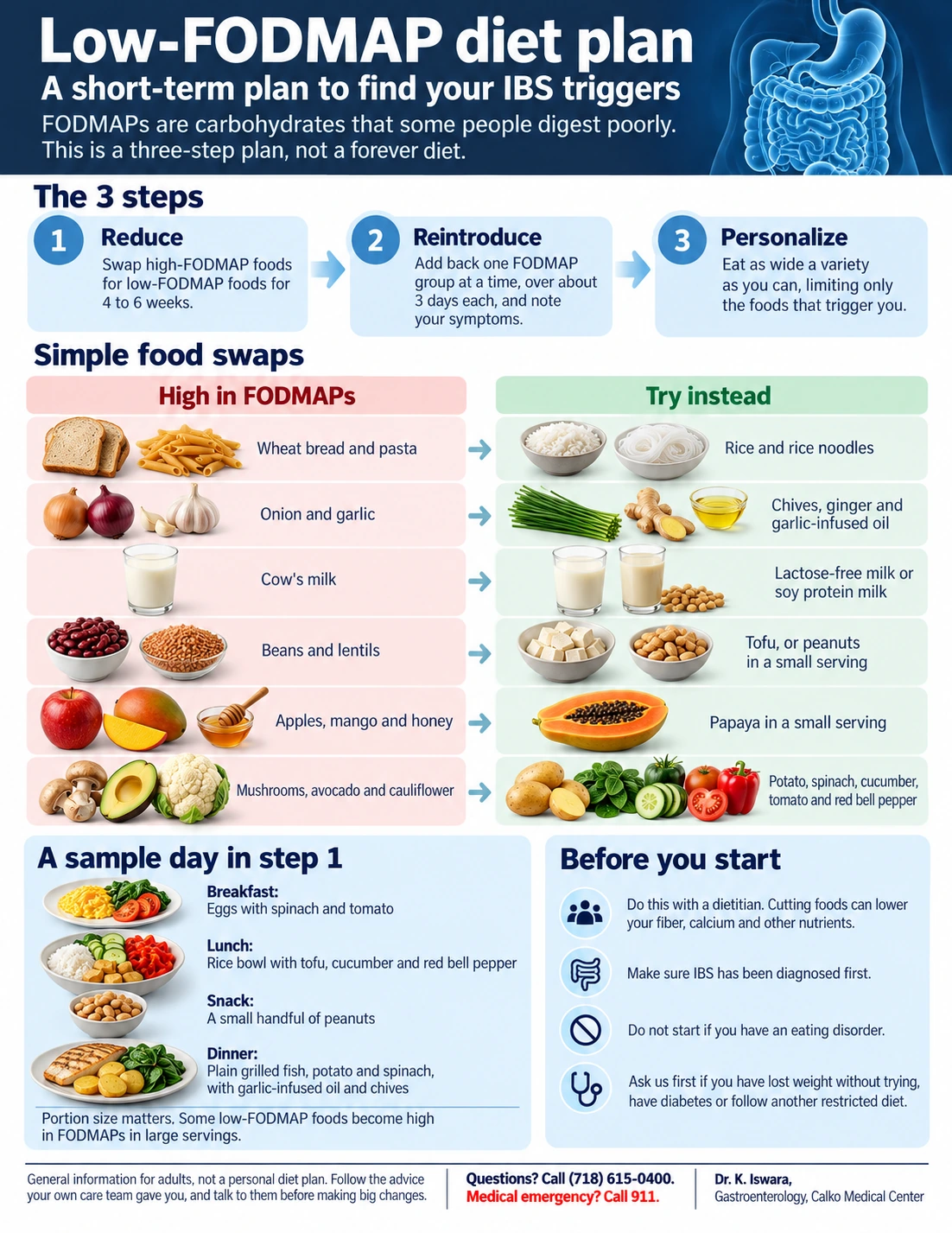
FODMAPs are carbohydrates that some people digest poorly. This is a three-step plan, not a forever diet.
| High in FODMAPs | Try instead |
|---|---|
| Wheat bread and pasta | Rice and rice noodles |
| Onion and garlic | Chives, ginger and garlic-infused oil |
| Cow’s milk | Lactose-free milk or soy protein milk |
| Beans and lentils | Tofu, or peanuts in a small serving |
| Apples, mango and honey | Papaya in a small serving |
| Mushrooms, avocado and cauliflower | Potato, spinach, cucumber, tomato and red bell pepper |
The 3 steps
- Reduce: Swap high-FODMAP foods for low-FODMAP foods for 4 to 6 weeks.
- Reintroduce: Add back one FODMAP group at a time, over about 3 days each, and note your symptoms.
- Personalize: Eat as wide a variety as you can, limiting only the foods that trigger you.
A sample day in step 1
- Breakfast: Eggs with spinach and tomato
- Lunch: Rice bowl with tofu, cucumber and red bell pepper
- Snack: A small handful of peanuts
- Dinner: Plain grilled fish, potato and spinach, with garlic-infused oil and chives
- Portion size matters. Some low-FODMAP foods become high in FODMAPs in large servings.
Before you start
- Do this with a dietitian. Cutting foods can lower your fiber, calcium and other nutrients.
- Make sure IBS has been diagnosed first.
- Do not start if you have an eating disorder.
- Ask us first if you have lost weight without trying, have diabetes or follow another restricted diet.
General information for adults, not a personal diet plan. Follow the advice your own care team gave you, and talk to them before making big changes.
Questions? Call (718) 615-0400. Medical emergency? Call 911.
Sources